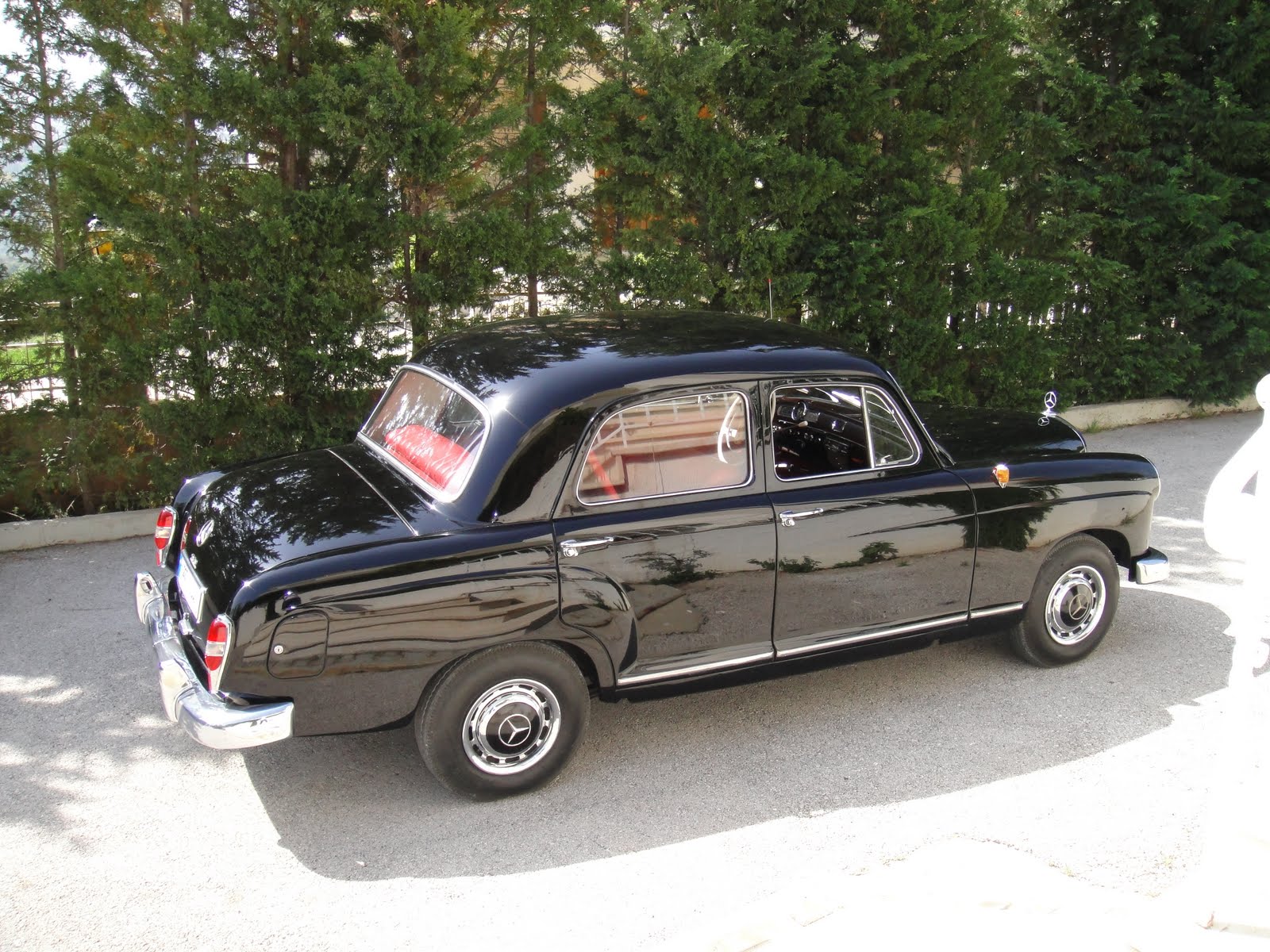
Behind the White Wheel

Behind the White Wheel

Friday, April 30, 2010

A No Man's Car

Hit by the female-appeal craze in 1955, Chrysler introduced the Dodge “La Femme”, the first and only American car marketed solely for women. “By Appointment to her Majesty…The American Woman” exclaimed the brochure. Though short lived, the 1955 -56 "La Femme" can’t but be considered a unique car reflecting a prosperous and beautiful era.


(Source Wikipedia)

In the 1950’s GM (Chrysler’s main competitor) introduced many models of cars having a certain feminine appeal. The Cadillac Eldorado Seville Baroness, Pontiac Pink Parisienne and the Chevrolet Impala Martinique were some of these cars.
Hit by the virus in the spring of 1955, Chrysler introduced the “La Femme” a two doors Dodge Custom Royal Lancer with some additional trim and accessories costing 143.30$ by the 1950s standards. The price of the Custom Royal Lancer was $2,543 back then.

“La Femme’s” exterior color scheme was Sapphire White and Heather Rose. Gold colored “La Femme” scripts replaced the standard “Custom Royal Lancer” scripts on the front fender.


(Source: Wikipedia)

The ultimate touches which personalize “La Femme” are its special feminine accessories. Two compartments located on the backs of the front seats are upholstered in Heather Rose Cord grain. The compartment on the driver's side contains a stylish rain cape, a fisherman's style rain hat and an umbrella which carry out the Jacquard motif. The other compartment holds a stunning shoulder bag in soft rose leather. It is fitted with a lighter, a lipstick and a cigarettes case.


(Source: Wikipedia)

"La Femme" was dropped for the 1957 model year, mostly because of a fairly high price for the options it had and maybe a lack of good promotion by Chrysler.

I tried to browse the internet looking for one for sale but in vain. These cars have become extremely rare. Though the “Custom Royal Lancer” might still be found on eBay (for example), its “La Femme” version has completely disappeared. Some estimates state that only twenty cars survived (one of them is in the displayed pictures).

These cars reflect the role women had in the 1950’s in the US: Back then, most of them had already joined the workforce. "La Femme", with its colors, options and shape, in addition to trying to add a certain feminine aspect to the extremely mannish cars’ environment, came as a scream for women to distinguish themselves from men on this particular side. The Europeans, in my opinion, did not tackle this issue in the same manner. They either introduced extremely small cars (such as the Citroen 2CV, or the Renault Dauphine) and marketed them as cars that would be “preferred” by women or simply pictured a woman driving a Mercedes-Benz 220S with the semi automatic Hydrak Clutch, for instance, implying that this car was easy to drive.

I strongly believe that the cultural and social differences between the US and Europe reflected extremely well on the automobile industry. The designs and the size reflected it most. In this posting a new dimension is observed: The Americans (Chrysler is this case) tried to completely differentiate between cars for women and cars for men. A certain marketing strategy I would say; bad in terms of sales results apparently, but extremely successful in terms of cultural heritage and originality.

Thursday, April 22, 2010

Fifteen Years…

« J'ai rencontré quelques peines, j'ai rencontré beaucoup de joie. C'est parfois une question de chance, souvent une histoire de choix. Je suis pas au bout de mes surprises la dessus y'a aucun doute. Et tous les jours je continue à apprendre les codes de ma route. » Grand Corps Malade

On the 23rd of April 1995, I took the first two pictures of my then newly acquired Mercedes-Benz 180. It was Easter day and my birthday! I had just turned fifteen!


Today, it’s the 23rd of April 2010. I’m turning thirty. As you can see, those are the latest two pictures of my car.


Fifteen years have gone by since the 23rd of April 1995 and I still own this car. As I wrote in the first post on this blog, “I have restored it, I have learned how to maintain it, and I know every single detail in it, every single wire, every single bolt...” well, I will say more this time…For fifteen years this car has been accompanying me…I used it whenever I could…Now that I think of incidents, funny stories etc… I imagine a movie running on the fast forward in my head. I see a lot of pictures, I hear engine, wind and all types of noises, and I smile when I glimpse the faces of my friends and loved ones sitting next to me in the car… It’s simply the movie of my life where this car has been, as I always wanted, a major part of it.
I admit I haven’t thought in 1995 where I will be on the 23rd of April 2010, nor in what condition the car will be. Today, I know I have made and was sometimes obliged to make many choices in my life. I do question some, not to the extent of feeling regret, but I am glad I made all the others. I’m pleased I kept the car in a very good shape and crossed many important milestones in its never ending amelioration process.
On the other hand, I’m gratified I kept my friends around me, met new ones and did my best to create harmony between them all. I’m thankful I belong to a family and to a village I go to whenever the pressure of the daily life becomes unbearable and I see myself as a unique reflection of the crazy society I live in. Those fifteen years shaped my personality; they made out of me the person I am now. The coming years hide surprises, bad ones and good ones, they will shape me again without being able to change everything in me…especially my love for classic cars…
I’ll stop here. You will feel that I deviated from the original objectives of this blog, but I assure you, dear readers, I haven’t; I simply never dissociated myself, and my friends have never dissociated me either, from my car. It simply comes with me… a freaky approach? Don’t push your thinking too far…take me as I am or read the "Behind the Freak: lifestyle and perceptions" blog…

See you again in a similar post in 2025…till then I’ll be discovering the coming chapters of “les codes de ma route”…

Tuesday, April 20, 2010

To Travel is Better Than to Arrive (Jeff Miller)


Nothing is better than a weekend escapade to the mountains away from the stress of the daily life. I chose to spend this weekend alone in Kafarhata Al Koura to relax and enjoy the beautiful spring weather.

Taking my classic Mercedes-Benz 180 is a must for such trips. I left home early in the morning, had breakfast with Nathalie and drove straight to Koura. The trip was amazing with very little traffic on the highway and the car cruising smoothly at around 90km/h. I enjoyed the amazingly calm sea, the clear weather and the blue sky along with beautiful Brel, Brassens, Piaf and Sinatra songs diffused by the old Becker Mexico tube radio. I crossed the Chekka tunnel, took the first exit and started climbing the different hills leading to my village. On my way, I was continuously sharing the small countryside roads surrounded by burgeoning olive trees and wild yellow flowers with several “young classics” most of them W114/115 and W123 Mercedes-Benz, Peugeot 504, Renault 12 etc...

The weekend was amazingly calm and serene. I read a lot, and enjoyed walking on the small roads of my village.

The greatest particularity of this weekend was that in addition to relaxing and detaching myself from the routine, I enjoyed every aspect of my car. Going out of the city for a weekend in a classic car is extremely special and enjoyable to an extent I believe that it’s the journey, not the destination that is most enjoyable!

Monday, April 12, 2010

Parked and Forsaken...


When I completed the restoration of my 180b in 1995 I was left with some small unfinished details. Among them was the missing outside mirror that was considered an extremely rare item!

One day in 1999 I detected by chance in Achrafieh a gray 190b still being used as a cab. The first thing I noticed was the original mirror on the front left fender. I parked next to it, looked at the driver and asked him if he would sell me the mirror of his car. The old man, surprised by my freaky question said he would give me the mirror only if I could get him any other one. Without hesitation, I went to a used car parts store and got him a Peugeot 504 mirror. I helped him install it, took my newly acquired mirror straight to the re-chroming shop and “hop” within a week the mirror was installed in my car.

Later on, in 2004, I saw the same car and driver waiting for a “client” at the same place…This time I decided to use his taxi services…I jumped out of my (now ex) girlfriend's car (I paid the price for leaving her alone) and asked him to take me to ABC Achrafieh. The ride was pleasant, the driver funny – a typical old service driver – and the car was running smoothly though it was relatively “tired”; something normal for a 40+ years old car…

Years passed by, and I started seeing this same car parked in Karm El Zeitoun next to my friend’s house. I wondered what happened to the driver since the car seemed to be disintegrating under the sun and the rain…I asked Youssef (since he knows the neighborhood) to check if the car is for sale…I had, and continue to have, a strong desire to acquire it and restore it!

As I expected, the owner of the car had passed away…Normally the ownership would have been shifted to his heirs – his wife in this case, since he had no children – unfortunately this did not happen because of some legal and financial disputes the owner had with the previous mayor of the region who also passed away…!!!
A bit out of reality story…but until now, the car is sitting at the corner of the street…waiting to be junked or to find a new owner…I’ll do my best to find the new owner or to be the new owner myself…my desire to restore it is getting stronger every day…

Follow me; the journey has just started…

Monday, March 22, 2010

"Le Temps de Vivre"


As every month, I bought my favorite magazine “Auto Retro”. What attracted me most in this issue was the editorial written by Xavier Audiau. He described in a beautiful way a major reason why classic cars owners love their cars and took me back to my childhood years as I saw myself in my father’s 1983 Honda Accord going from Beirut to Rabieh (yes that was one hell of a trip back then) or from Rabieh to Koura or even from Montreal to Toronto or to NYC in the 1989 dark blue Ford Taurus!
Does anyone remember those endless trips? What did you use to do? Sing? Look at the odometer’s reading from behind your dad’s shoulders? Fight with your brothers or sisters?
I used to do all these things, while my father was driving and my mum either giving us biscuits or pushing us to sing maybe one of the famous Sound of Music’s songs…
Dear readers, here’s Audiau’s editorial as he wrote it, in French. I decided not to translate it since his way of writing contributed in my opinion to its beauty.

“C’était il y a longtemps…A une époque où l’on voyageait encore en automobile. L’orsqu’on arrivait à destination, chez des amis ou bien dans la famille, on observait un rituel obligatoire: on refaisait verbalement le voyage en arrière avec moult details. Tout y passait, le nom des villages traversés, les détours, la lente caravane impossible à doubler, les bonbons à la menthe en attendant l’heure du déjeuner, les points cadeau offerts à la station-service, le poste radio diffusant les chansons de Brel et les concertos de Paganini, l’épouse qui ne saura jamais lire une carte…Il existait alors une loi naturelle de la puissance: Il était normal de se ranger quand une DS ou une Mercedes mettait son clignotant. Point d’orgue du récit, on avouait avec fierté sa “moyenne” et l’on attendait le verdict comme une note de bonne conduite devant une bière ou une limonade. Mon père roulait vite. Comme tous les papas. C’était écrit blanc sur noir sur le (très optimiste) compteur: 160 maxi! Il fut un temps où la vitesse était un signe de maîtrise du volant et du sens des responsabilités.
Aujourd’hui, on se déplace. A peine parti, on connait déjà son heure d’arrivée. On règle la clim’ au degrée près, le GPS indique la route et les conditions de circulation en temps réel. Avec ce sentiment d’être constamment traqué par une paire de jumelles…Alors, on tue le temps avec les écouteurs d’un lecteur MP3, les enfants regardent une vidéo ou ne décrochent plus de leur console de jeux. On ne roule plus ensembles mais seuls, côte à côte. Au terme d’un voyage au bout de l’enfer, personne n’oserait plus claironner une “moyenne” sans risquer un regard réprobateur ou le doigt pointé. C’était il y a longtemps…Je pensais à tout ça l’autre matin dans un bouchon. Voilà pourquoi aussi je serai toujours un farouche défenseur de l’automobile ancienne. Car paradoxalement, meme si l’on roulait “vite”, on avait encore le sens de l’essentiel: On prenait le temps de vivre…”

Wednesday, March 10, 2010

Young Classics Around Us


One of the most common scenes in Beirut is streets packed with cars, mini vans, and trucks of all sorts…new cars and “more mature” ones share the large and tight roads of Beirut honking, smoldering, and trying to get to their destination in the everlasting traffic jam!
As years pass by, new cars replace older ones! Just like human beings when a generation comes after the other!! When I walk across Beirut streets, I mainly notice old fleets of cars, young classics, a term Mercedes-Benz created to describe its cars made after 1960.
For Mercedes-Benz, young classics are cars that “one doesn’t have to be an expert to recognize. They are cars that were part of daily life, and became a landmark of our culture, cars that enlivened the streets and inspired generations. These cars are a part of history that can still be found on the roads today”.
For me, these cars are not just Mercedes-Benz! They are Peugeot, Renault, Ford Taunus, Chevrolet, Honda Accord and Civic, BMW, Opel, VW Beetle, Mini Cooper, Saab, etc… They are cars I grew up seeing around and cars I still spot today. They are moving “landmarks” and indeed “part of our culture” or at least my culture. Would you imagine a cab - “a service” in our Lebanese dialect - that is of a brand other than a Mercedes-Benz W114/115 or W123, for instance? Would you imagine a nun driving a car other than a Peugeot 504 or 505?

Are these cars worth saving? As a classic-car lover and restorer, I would at least buy and restore one of each model (models I like naturally). I would definitely restore a Mercedes-Benz 190 fintail, a Mercedes-Benz 200 or 230.4 (W114/115), a Mercedes-Benz W123, a Peugeot 404 and 504, a Renault 5 early models, a BMW 2002, a 1960 VW Beetle or Karmann Ghia and an Opel Rekord of 1980 (since my father used to own one back in the 80s)
Buying and restoring these cars is relatively easy and cheap since the parts are still widely available. Also, once restored, these cars can be easily used during weekends and even on a daily basis.

Dear reader which car would you think of buying? The answer depends on what you’re looking for… are you looking for the car your father used to own when you were a kid? Are you looking for a car that you dreamt of owning when you were at school? Or are you looking for a car that would reflect your style?

The sky is the limit!

Tuesday, March 2, 2010

The truth about Bakelite…


Many might find this article out of context but I’ve been “harassing” my friends with bakelite for at least the past 7 years! So I decided to give bakelite a tribute in this post! A final one…therefore dear friends, bare to read one last article about bakelite…

I first discovered bakelite when I bought my car in 1995. The dashboard consists of many pieces all made of bakelite. Visually bakelite looks like hard brown plastic…however; if we touch it we can easily know that it’s not usual plastic!
What is bakelite then?
Bakelite is a type of plastic material that was invented by the Belgian Leo Beakeland (1863 - 1944) in 1907, in his laboratory in the US. It was the first synthetic plastic. Bakelite became a very popular trade name, just as popular as Hoover or Kleenex. It was used in thousands of products like cars, radios, electricity products, and so on.

In 1927, the patent on the bakelite production ended; hence the world witnessed the spread of the use of bakelite as it was cheaper than wood and steel! Bakelite took many forms, shapes, rendering various different designs. For example, Art Deco influenced many Bakelite products. Besides, the great depression in the 1930s, spread further the use of bakelite as it was cheaper than other products (wood and steel, as mentioned earlier) - Bakelite seems to have been specially "conceived for” the depression.
Many people thought that the design of products would make them more attractive in addition, of course, to their affordable price.
Bakelite was highly used in cars especially popular ones; my 1961 Mercedes-Benz 180, for instance, contains a significant amount of bakelite!! Actually, the entire dashboard, windows surrounds, and the fuse box are made of bakelite.

With time, bakelite becomes dull thus less shiny… My car faced this problem, I was however able to restore its original semi-glossy brown appearance by following Jeff Miller’s method. In fact, Miller suggested that dull bakelite should be cleaned with water then with clean cotton; one should apply a very thin layer of petroleum jelly before polishing the whole thing with another clean dry tissue. The results I got were amazing. This process should be repeated every 9 months (or less) depending on the location of the part made of bakelite.

Now I’m done with bakelite, I promise not to mention it again in this blog!
I want to thank my friends, especially Kamal, Georges and Ziad for storing with care the bakelite windows surrounds before shipping them to Beirut. Thanks to you these parts are “happily” mounted in their designated place in my 1961 Mercedes-Benz 180 now!! I would also like to thank Zina for still storing (hope so) a big bakelite piece in her home in Montreal…